11 Phrases You Can Use to Make Your Child Fond of Knowledge
To make your child fond of knowledge is something you probably think about often, especially when you see how fast the world is changing. You want your youngster to love learning because they genuinely enjoy learning new things, not because of grades or pressure. I’ve seen many parents who are concerned that their kids are becoming disinterested in studying, particularly when screens captivate them more than books do. I’ve experienced the same anxiety, wondering if I’m doing enough.
According to University of Michigan research, kids who get emotional support during schooling are more likely to find studying enjoyable in the long run. This implies that you may not be aware of the power of your words. Your child’s perception of learning can be shaped by the proper words, which can make it seem joyful or like a chore.
1. Say often, “I love how curious you are”, To Make Your Child Fond of Knowledge
When curiosity is recognised, children thrive. Because curiosity encourages children to explore naturally, studies on child development show that it is associated with improved academic performance. Recognising their interest helps kids understand that asking questions is the start of learning rather than an interruption. This sentence eventually inspires students to continue inquiring, investigating, and learning without fearing being judged.
2. Let’s figure this out together.
Your child feels less pressure when you are involved in their education. According to research from Harvard’s Centre on the Developing Child, collaborative problem-solving boosts self-esteem and strengthens brain connections related to reasoning. You will experience how this remark eases irritation by turning a difficult moment into a time of connection and teamwork rather than tension.
3. It’s okay not to know yet.
Because they believe adults expect them to know everything right away, children fear making mistakes. According to psychologist Carol Dweck’s research on growth mindset, the word “yet” helps kids understand that learning is a process. This statement reassures them that ignorance is a natural and healthy element of learning rather than a sign of failure.
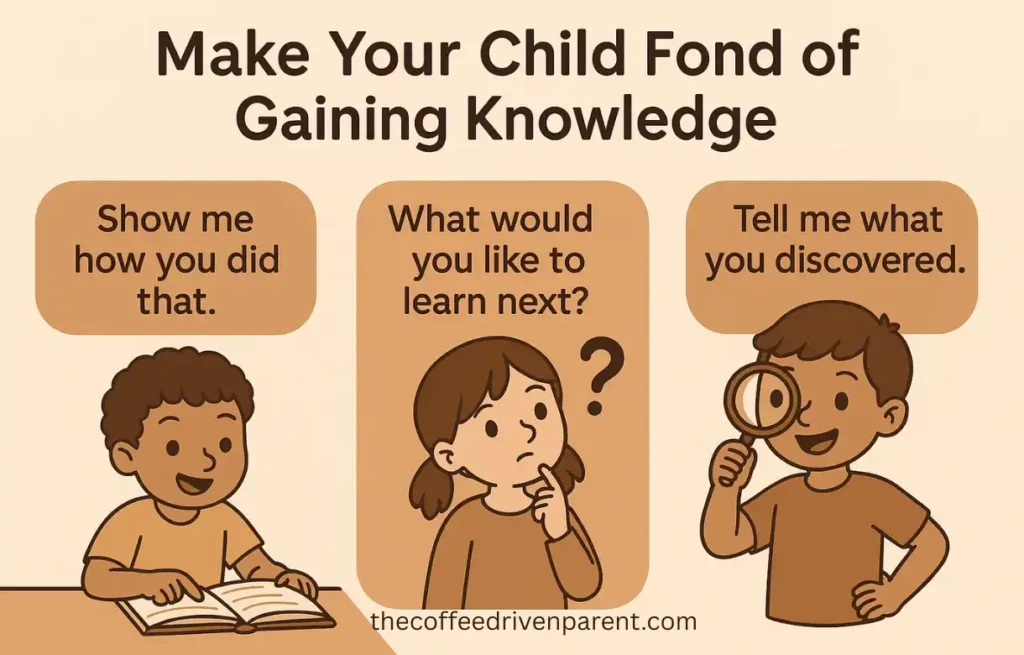
4. Tell me what you discovered.
Ask them what they learnt instead of what they got right. This causes them to focus on comprehension rather than performance. After using this phrase, I’ve seen my child become more open to and fond of gaining knowledge because they believe their opinions are essential. When adults reward children’s insights rather than just their outcomes, children become more self-motivated learners.
5. Your effort really shows.
Effort-based praise improves motivation far more than talent-focused praise. When you emphasise effort, you inspire your child to persevere through difficult situations and be fond of gaining knowledge. Resilience is developed as a result, which is crucial for lifelong learning.
6. What got you to consider this?
Your youngster is encouraged to investigate their thinking using this phrase. Children’s problem-solving abilities improve when they express their ideas, and fond of gaining knowledge. Children enjoy answering questions about how they think because it helps them feel competent and appreciated, which increases their desire to study.
7. You found a new way to solve it.
When kids are allowed to think creatively, they become more inventive. Instead of rewarding conformity, this term promotes inventiveness. Kids are more likely to like learning and stick with new tasks if they feel encouraged to try different tactics. You can make studying feel like an adventure rather than a set path by showcasing their creative approach.

8. Learning new things takes practice, and you’re doing great.
For kids, practice can often be the most challenging element. Children who understand that learning necessitates repetition are less frustrated. I’ve heard this remark lessen tears during homework more times than I can recall, and it helps your youngster be patient with themselves.
9. Explain how you achieved that.
This remark empowers your child to become a teacher. The “protégé effect” describes how youngsters improve their memory and comprehension when they explain things. They feel competent and knowledgeable, which boosts their confidence. This expression creates a secure atmosphere where your child is proud to learn.
10. You’re getting better every time.
Feedback that is progress-focused enables kids to recognise even tiny gains. Observing minor improvements promotes long-term learning practices. When your child hears this, they start to associate effort with advancement, which makes learning incredibly fulfilling.
11. What would you like to learn next?
When kids feel in control of what they learn, they start to enjoy learning. Giving children the freedom to select their own subjects encourages intrinsic motivation. Autonomy stimulates perseverance, creativity, and involvement. When kids believe their interests are vital, I’m frequently taken aback by how eager they are to learn.
Conclusion
It’s not about perfect parenting; it’s about using language that offers courage, confidence, and curiosity. The expressions mentioned above don’t work like magic, but they do foster emotional safety, which is associated with improved learning outcomes. You can show your youngster that learning is a lifelong habit worth cherishing by using these phrases in your everyday interactions.
As you continue supporting them, you’ll discover that using encouraging language can have a significant impact on their development for years to come. What really makes your child fond of gaining knowledge and learning is your presence, tolerance, and direction.
FAQs on Google About the Keyword
How can I make my child fond of gaining knowledge?
Encourage curiosity, praise effort, and create a supportive environment. Use positive phrases that make learning feel enjoyable rather than pressured. Children learn best when they feel safe, understood, and motivated by interest instead of fear.
Why do some children lose interest in learning?
Children may lose interest due to pressure, fear of mistakes, or lack of meaningful engagement. When learning feels forced or stressful, motivation naturally drops. Supportive language and autonomy help rebuild curiosity.
What daily habits help a child fond of gaining knowledge?
Reading together, exploring questions, allowing hands-on activities, and having open conversations spark natural interest. Consistency matters—small daily interactions build long-term learning habits.
Do positive phrases really improve learning motivation, and is a child fond of gaining knowledge?
Yes. Research shows that children who receive effort-focused and curiosity-based encouragement build stronger motivation, resilience, and problem-solving skills. Words shape how children see themselves.
How do I encourage my child to ask questions?
Respond with patience and enthusiasm. Show genuine interest in their thoughts, and avoid dismissing questions as annoying or unnecessary. This builds confidence in their curiosity.
What should I avoid saying to my child while they are learning?
Avoid phrases that compare them to others or suggest failure. Statements like “You should know this by now” or “Why can’t you do it like your friend?” harm confidence and interest.
How can I make learning fun at home?
Use games, real-life examples, storytelling, and exploration. Children learn best when activities feel like play rather than formal lessons. Engage with their interests.
Can praise make a child more curious?
The right kind of praise—focused on effort, strategies, and curiosity—has a strong positive effect. It teaches children that learning is valued, not just outcomes.
How early should I start encouraging learning habits?
You can begin from the toddler years by encouraging exploration and conversation. Early positive experiences create strong foundations for future learning.
How do I support a child who gets frustrated easily?
Stay calm, acknowledge their feelings, and remind them that learning takes practice. Offer help without taking over the task. Your steady presence reduces frustration.