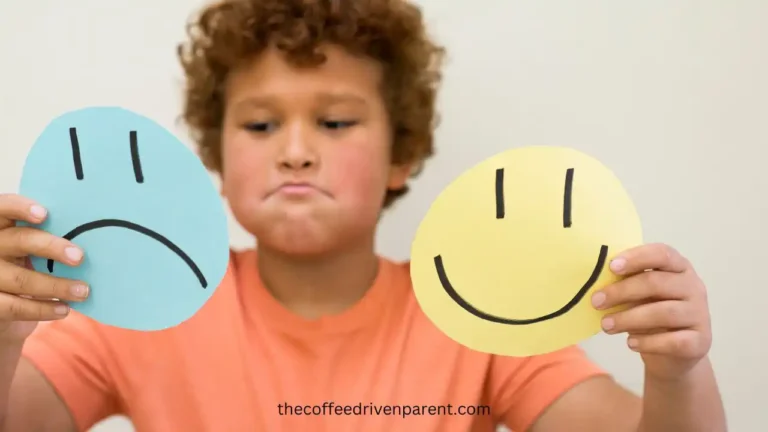
Kids Selfish to the Core Go Through 11 Family Conflict Patterns
The school setting, friendships, and media exposure are likely to come to mind when you consider how youngsters form their personalities. In reality, however, the most significant effect always begins at home. Children’s perceptions of relationships, justice, collaboration, and empathy are influenced if the emotional atmosphere of the house is tense and full of unresolved conflicts, which makes kids Selfish to the Core.
Specific conflict patterns could lead children to become deeply self-centred, particularly when they feel the need to defend themselves as they get older. Family conflict is one of the best indicators of behavioural difficulties, including increasing selfishness in children from middle childhood to adolescence. And when you look back at your own upbringing, you may notice how the emotional culture of your home shaped your reactions, fears, and even the way you relate to other people today.
Parents Constantly Competing Instead of Cooperating
Children learn that playing one parent against the other is the only way to achieve their goals when they witness both parents tugging in different directions. You may see children pushing boundaries or manipulating circumstances because they believe there is always a “better deal” available in homes where competition replaces partnership.
Psychologists have long noted that children prioritise self-interest over harmony when parents respond inconsistently, which can be confusing. A competitive parenting environment teaches them to put winning above justice or empathy, even though you may think you’re defending your authority. If you grew up with parents who didn’t speak in one voice, you probably remember how you learned to navigate them strategically.
To shift this, you don’t
Blame-Focused Conversations That Make Kids selfish and Defensive
Children soon learn that owning up to mistakes is dangerous when disagreements consistently result in finger-pointing. To defend themselves, they begin to lie, excuse, and place blame on others. Over time, this develops into a self-centred tendency, as they prioritise avoiding accountability over facing the consequences of their actions.
According to studies on family communication styles, children who grow up in households where there is a lot of blame are more likely to struggle with empathy and accountability because they identify mistakes with punishment rather than development.
You can find yourself repeating things you heard as a child, particularly if your own parents were quite critical of mistakes. Teaching kids that errors are common and can be fixed with honesty rather than fear is the change here. They instinctively learn to put connection ahead of self-preservation when they witness you handle disagreements with composed contemplation rather than resorting to assault.
Parents Arguing About the Child in Front of the Child
Hearing parents argue over them is one of the things that most affects a child’s sense of security. They begin to feel responsible for the tension, which leads to confusion and guilt. They could adopt a self-centred mindset to protect their emotions, continually seeking ways to reduce their own stress or avoid the spotlight.
Children who grow up in emotionally unstable environments become more inward-focused because they feel unable to resolve the conflict in their environment. Even if you weren’t aware of the specifics, you could recall feeling a lot of pressure if your parents fought about you.
One Parent Overgiving While the Other Withdraws
Children learn from this imbalance that affection and care are conditional. They discover that one parent is the source of satisfaction and the other should be avoided. This dynamic encourages children to regard others as applicable rather than with respect. Family researchers frequently discuss “emotional triangulation,” in which kids are drawn to one side and grow up with a transactional attitude. Relationships start to seem more like tools than ties.
Conflict That Ends Without Resolution
Many families settle disputes without dealing with the underlying problem. Children then observe adults avoiding closure, ignoring emotional scars, or acting as though nothing is wrong. They learn from this that connections need to be silently repaired. As a result, they begin to prioritise emotional escape over empathy, which eventually breeds selfishness.
If you were raised in such a household, you could be aware of how uneasy you are in more in-depth discussions. Modelling repair, saying sorry, expressing emotions, and ending conversations with understanding are necessary to change this behaviour. Children who witness fixes learn to cooperate rather than withdraw selfishly.
Parents Showing Favoritism Between Siblings
Emotional Survival behaviour results from favouritism. While the less favoured child may become withdrawn, the favoured youngster grows entitled. Because children concentrate on competing for attention for what they have, both results encourage selfish tendencies. Perceived favouritism is associated with increased self-focus and decreased empathy among children.
The emotional pain of having one of your siblings treat you differently can still be fresh in your mind. It takes awareness to change this; instead of treating every youngster the same way, make them all feel equally important.
Parents Invalidating Each Other’s Feelings
Children learn that partnerships don’t need empathy when they witness one parent minimising the other’s feelings. They can start disregarding friends, instructors, or siblings in an attempt to imitate this behaviour. Children learn that emotions are flaws through emotional invalidation, such as remarks like “you’re overreacting” or “that’s not a big deal.” Children who experience emotional invalidation are more likely to develop self-centred coping mechanisms because they rely more on self-defence than on connection.
You may have had times when people ignored your personal emotions. Teach your children that emotions should be given space to end the cycle. Your kids learn emotional generosity when you affirm your relationship, especially in stressful situations.
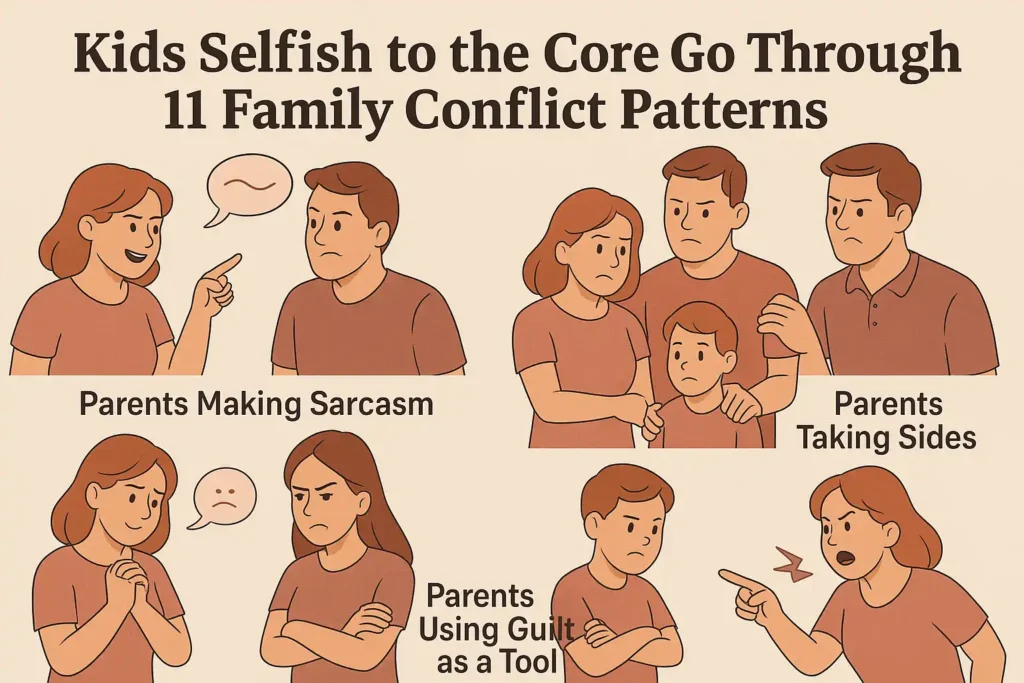
Parents Making Sarcastic or Passive-Aggressive Comments
Adults might see sarcasm as harmless, but children perceive it as insecurity. They start watching out for themselves more than others when they face a setting full of subtle jabs because it feels unpredictable. Chronic passive-aggression in households is linked to social behaviour issues, such as poor cooperation and heightened self-protective behaviour, according to developmental research.
You may recall the uncertainty that sarcasm can produce if it was common in your childhood home. Speaking honestly and politely is the first step to change, particularly when expressing frustration. When communication is straightforward and secure, children become less arrogant and more receptive.

Parents Taking Sides During Conflicts
Children learn to separate relationships into “teams” when adults take sides. They learn to put self-interest ahead of fairness. As a result of this tendency, they learn to judge people by alignment rather than empathy. According to clinical observations, children who are exposed to alliance-based family conflicts adopt controlling or manipulative behaviours to maintain their benefits.
Parents Using Guilt as a Tool During Arguments
Comments like “look what you made me do” or “you don’t appreciate anything” are examples of guilt-based parenting, which teaches kids that relationships are founded on duty rather than understanding. Because shame feels oppressive, children who are exposed to guilt tactics regularly grow up to prioritise their wants aggressively. According to research, children’s self-focused coping strategies and avoidance behaviours are closely correlated with emotional manipulation in families.
If your upbringing involved the use of guilt, you most likely learnt early on to keep your emotions in check by being focused on yourself or keeping your distance. Express your needs in a straightforward and emotionally detached manner to change this. When children feel valued rather than burdened, they build empathy.
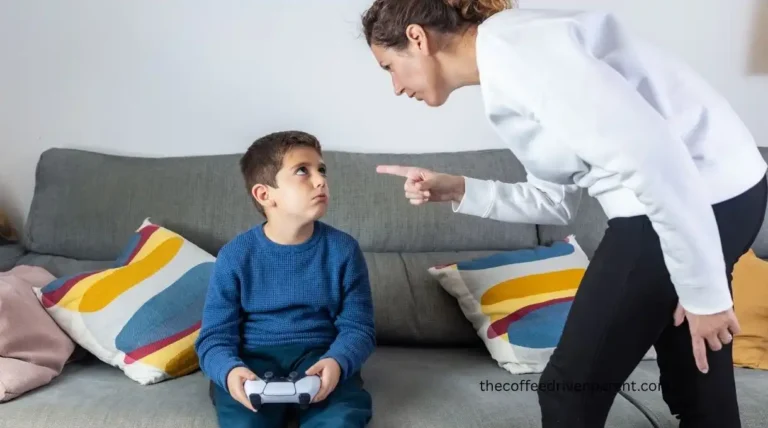
Conflict-Filled Homes With No Emotional Regulation
Children start imitating adults’ outbursts during conflicts, such as yelling, slamming doors, and shutting down. They learn, through uncontrolled conflict, that controlling others works better than building relationships with them.
According to developmental studies, children who are exposed to significant conflict often display higher levels of selfishness because they are focused on emotional Survival. They gain emotional regulation through observation.
You may see how quickly self-defence becomes a habit if you have ever experienced emotional periods as a child when you felt unsafe. Your youngster will learn that relationships are not battlefields if you model emotional composure under pressure.
Breaking the Patterns That Make Kids Selfish to the Core
If you identify these conflict patterns in your household, keep in mind that raising awareness is the first step towards changing everything. Rarely do kids intentionally become completely self-centred; instead, they acquire these characteristics as emotional defences in situations when their surroundings seem competitive.
Your child will soften, share more, and form healthier connections with others as you gradually shift the emotional atmosphere in your home. You are aiming for emotional safety, not perfection. Your child will naturally develop empathy if you model fairness, honest communication, and peaceful conflict resolution. You will be able to cure parts of your own childhood that you were unaware were still influencing you.
FAQs about Kids Selfish to the Core
When should I worry about selfish traits in children?
Worry when selfish behavior persists across environments, like in the home, school, and friendships, and doesn’t improve with guidance. If your child shows long-term lack of empathy, manipulates others, or can’t tolerate sharing, it might signal deeper emotional needs that require attention.
Can inconsistent discipline make kids selfish?
Yes, inconsistent discipline confuses children. When rules change depending on mood or situation, kids focus on personal advantage rather than responsibility. Clear expectations and steady consequences help them understand fairness, which builds empathy and reduces self-centered behavior.
Do sibling conflicts make kids selfish?
Yes, when sibling conflicts involve favoritism or competition, kids develop selfish traits to protect their position. But healthy sibling rivalry teaches sharing and cooperation when parents guide fairly. Balanced attention and clear boundaries reduce selfishness caused by competition.
Is selfishness a sign of bad parenting?
Not necessarily. Many factors influence kids develop selfish traits, temperament, stress, family tensions, and unmet emotional needs. Parenting isn’t about perfection but awareness. When you recognize harmful patterns and correct them, your child learns healthier behaviors. Growth happens through small, consistent changes.
How can I teach empathy to a selfish child?
Teach empathy through modeling kindness, discussing emotions, encouraging sharing, and letting your child see different perspectives. Praise thoughtful behavior and gently address hurtful actions. Kids learn empathy when they feel safe, valued, and emotionally understood by their parents.
What are the developmental signs of selfish traits in children, if my child is selfish to the Core?
Signs include constant blaming, refusal to share, manipulation of situations, ignoring others’ feelings, expecting special treatment, and strong reactions to limits. If these behaviors persist and worsen over time, they may reflect deeper emotional patterns formed at home or in relationships.
Can selfish traits in children be reversed?
Yes, selfish tendencies can be reduced through modeling empathy, providing emotional security, and setting consistent expectations. Kids learn most from what they see daily. When adults communicate calmly, repair conflicts, and encourage fairness, children slowly shift toward cooperation and more thoughtful behavior.
How do family conflicts lead to devlop selfish traits in children?
When children watch adults argue, compete, or avoid resolving problems, they feel unsafe. This insecurity makes them focus more intently on their own needs. Conflict-filled homes encourage self-protection, manipulation, or emotional withdrawal, which gradually shape selfish traits if the environment doesn’t improve.
Is being selfish normal for kids?
Yes, some selfishness is typical in early childhood because kids are still learning empathy. But when selfish habits persist or grow stronger, it may reflect home dynamics, emotional stress, or unmet needs. With patient guidance and consistent boundaries, most children naturally develop sharing, empathy, and cooperation.
What makes kids selfish to the Core?
Kids often become selfish when they grow up in homes with constant conflict, favoritism, inconsistent rules, or emotional insecurity. They learn to protect themselves first. When emotional needs are unmet or unpredictable, people focus on personal gain rather than empathy, which shapes long-term selfish behavior.
Why are some kids selfish to the Core?
Kids may seem selfish to the Core because their brains are still developing empathy, patience, and awareness of others. Young children naturally think about their own needs first. With guidance, modeling kindness, and consistent boundaries, most kids learn to share, understand feelings, and become more considerate over time.
What makes kids selfish to the Core during childhood?
Kids can appear selfish to the Core due to normal developmental stages, lack of emotional regulation, or inconsistent routines at home. They are still learning social rules. Supportive teaching, positive examples, and clear consequences help them build empathy and reduce self-centered behavior as they grow.
How can parents deal with kids selfish to the Core
Parents can handle kids who seem selfish to the Core by setting firm boundaries, praising sharing, modeling kindness, and teaching emotional awareness. Calm explanations and consistent routines help children understand consequences. Over time, patience and practice encourage more cooperative, thoughtful behavior and reduce extreme self-centered actions.
How do you teach empathy to kids selfish to the Core?
Teach empathy to kids selfish to the Core by naming emotions, asking how others might feel, modeling kindness, and encouraging small acts of helping. Use stories and role-play to show perspectives. Reward positive behavior and gently correct negative actions. Consistency helps kids understand and practice empathy.
Can kids selfish to the Core grow into kind adults?
Yes, kids who seem selfish to the Core can grow into very kind adults. With consistent guidance, emotional education, supportive environments, and good role models, children learn compassion and cooperation. Most self-centered behavior is temporary and improves as their brain, understanding, and life experiences expand.
What mistakes make kids selfish to the Core?
Inconsistent rules, giving in to every demand, lack of responsibilities, and modeling selfish behavior can make kids selfish to the Core. When children don’t learn limits or empathy, they may focus only on their needs. Balanced discipline and positive examples help prevent long-term self-centered tendencies.
Are kids selfish to the Core because of modern parenting?
Some believe modern parenting styles can make kids selfish to the Core, especially when limits are missing. Over-indulgence or lack of responsibilities may contribute. But many factors—development, environment, and temperament—also play roles. Balanced parenting with structure, empathy, and expectations helps children grow considerate and responsible.
Do kids selfish to the Core have trouble making friends?
Kids selfish to the Core may struggle to make friends because others feel ignored or unappreciated. They often focus on their own wants. Teaching sharing, turn-taking, and empathy slowly improves their social skills. With guidance and consistent practice, they can build stronger, healthier friendships over time.